PottsMPNN
Design protein sequences and predict mutation energies from a protein backbone.
Overview
PottsMPNN combines structure-conditioned sequence design with a learned Potts energy model. Generate sequences for a protein backbone, optionally optimize them, or predict relative mutation energies for individual variants and saturation scans. Scores are model energies in arbitrary units, not calibrated thermodynamic measurements.
Run PottsMPNN on Neurosnap
The PottsMPNN online webserver allows anybody with a Neurosnap account to run and access PottsMPNN, no downloads required. Information submitted through this webserver is kept confidential and never sold to third parties as detailed by our strong Terms of Use and Privacy Policy.
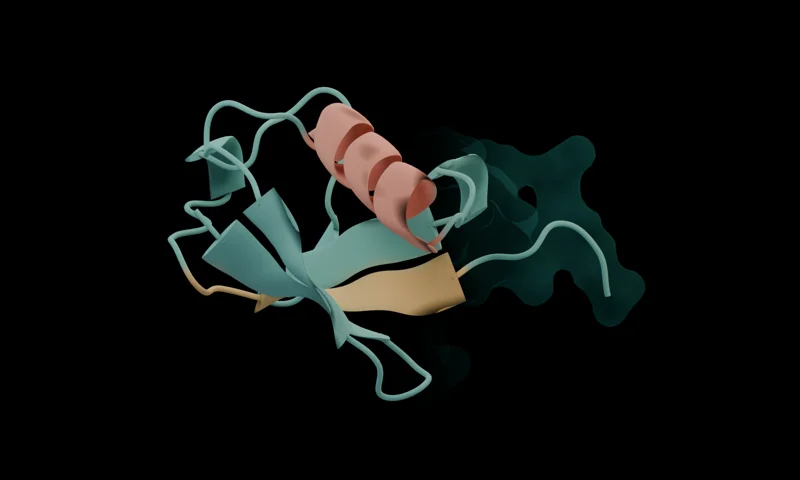
Features
- Generate backbone-conditioned sequences with optional Potts or node optimization.
- Score specific single or combined mutations, or scan all single substitutions.
- Estimate binding mutation energies with explicit chain partitions.
- Choose vanilla or soluble models, including MSA-trained checkpoints.
Statistics
Neurosnap periodically calculates runtime statistics based on job execution data. These estimates provide a general guideline for how long your job may take, but actual runtimes can vary significantly depending on factors like input size or settings used.
| Statistic | Value |
|---|---|
| Credit Usage Rate | loading... |
| Estimated Total Cost | loading... |
| Runtime Mean | loading... |
| Runtime Median | loading... |
| Runtime Standard Deviation | loading... |
| Runtime 90th Percentile | loading... |
| Runtime Longest | loading... |
API Request
Access PottsMPNN using the Neurosnap API by sending a request using any programming language with HTTP support. To safely generate an API key, visit the API tab of your overview page.
Similar Tools
Explore tools with similar features, categories, and use cases.
Citations
Please cite the original work when using PottsMPNN in publications or research outputs.
|
Birnbaum and Keating. Beyond native sequence recovery: Improved modeling of the sequence-energy landscape of protein structures. PNAS (2026). doi:10.1073/pnas.2535494123. |
|
Neurosnap Inc. (2022). Neurosnap: An online platform for computational biology and chemistry. Available at: https://neurosnap.ai/ |