Crystal Relaxation
Relax a periodic inorganic crystal with a selected ML potential or PBE DFT engine and inspect force and stress convergence.
Overview
Relax one ordered bulk inorganic crystal from a CIF using a selected machine-learned interatomic potential or PBE density-functional theory backend. Optimize atomic positions with a fixed cell, or optimize positions and the cell at the selected external pressure. Results include the relaxed crystal, energies, forces, stress, and convergence history.
Run Crystal Relaxation on Neurosnap
The Crystal Relaxation online webserver allows anybody with a Neurosnap account to run and access Crystal Relaxation, no downloads required. Information submitted through this webserver is kept confidential and never sold to third parties as detailed by our strong Terms of Use and Privacy Policy.
Features
- Accepts one CIF with fully occupied, ordered sites and at most 512 atoms after crystallographic symmetry expansion.
- Runs one selected backend per job: MACE-MPA-0, MACE-MP-0b3, conservative Orb-v3, MatterSim, SevenNet-MF-ompa, Quantum ESPRESSO, CP2K, or ABINIT. No automatic switching; DFT can optionally include D3(BJ) dispersion.
- Supports fixed-cell atomic relaxation and simultaneous atomic and cell relaxation at the selected external pressure.
- Reports independent physical force and stress criteria, separating convergence from step and time limits.
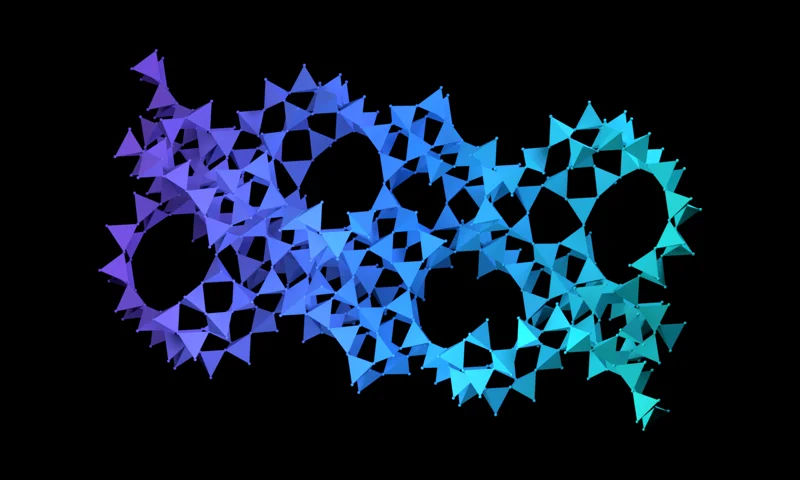
- Provides interactive crystal views and optimization-step playback, plus the relaxed CIF, trajectory, cell parameters, forces, stress, and energy history.
Statistics
Neurosnap periodically calculates runtime statistics based on job execution data. These estimates provide a general guideline for how long your job may take, but actual runtimes can vary significantly depending on factors like input size or settings used.
| Statistic | Value |
|---|---|
| Credit Usage Rate | loading... |
| Estimated Total Cost | loading... |
| Runtime Mean | loading... |
| Runtime Median | loading... |
| Runtime Standard Deviation | loading... |
| Runtime 90th Percentile | loading... |
| Runtime Longest | loading... |
API Request
Access Crystal Relaxation using the Neurosnap API by sending a request using any programming language with HTTP support. To safely generate an API key, visit the API tab of your overview page.
Similar Tools
Explore tools with similar features, categories, and use cases.
Citations
Please cite the original work when using Crystal Relaxation in publications or research outputs.
|
Grimme, S., Ehrlich, S. and Goerigk, L. Effect of the damping function in dispersion corrected density functional theory. Journal of Computational Chemistry 32, 1456-1465 (2011). https://doi.org/10.1002/jcc.21759. |
|
Orbital Materials. Orb-v3: atomistic simulation at scale. https://arxiv.org/abs/2504.06231. |
|
Microsoft Research. MatterSim: A Deep Learning Atomistic Model Across Elements, Temperatures and Pressures. https://arxiv.org/abs/2405.04967. |
|
Kim, J. et al. Data-Efficient Multifidelity Training for High-Fidelity Machine Learning Interatomic Potentials. https://doi.org/10.1021/jacs.4c14455. |
|
Quantum ESPRESSO project. https://www.quantum-espresso.org. |
|
CP2K Developers Group. CP2K quantum chemistry and solid-state physics software. https://www.cp2k.org. |
|
ABINIT developers. ABINIT electronic-structure software. https://www.abinit.org. |
|
Batatia, I. et al. A foundation model for atomistic materials chemistry. arXiv:2401.00096. https://arxiv.org/abs/2401.00096. |
|
van Setten, M. J. et al. The PseudoDojo: Training and grading a 85 element optimized norm-conserving pseudopotential table. https://doi.org/10.1016/j.cpc.2018.01.012. Pseudopotentials are distributed under CC BY 4.0. |
|
Larsen, A. H. et al. The atomic simulation environment—a Python library for working with atoms. Journal of Physics: Condensed Matter 29, 273002 (2017). https://doi.org/10.1088/1361-648X/aa680e. |
|
Neurosnap Inc. (2022). Neurosnap: An online platform for computational biology and chemistry. Available at: https://neurosnap.ai/ |